Mitsubishi Air Conditioning Unit Manual: A Comprehensive Guide
This comprehensive guide details Mitsubishi air conditioning systems, covering installation, operation, maintenance, and advanced features; Manuals are available in multiple languages, including English, French, and German.
Mitsubishi Heavy Industries Thermal Systems is a leading global provider of innovative climate control solutions, renowned for its energy efficiency and reliability. Their air conditioning systems cater to a diverse range of needs, from residential split-type units to large-scale commercial installations like City Multi and Mr. Slim.
These systems utilize advanced technologies, including inverter control, to optimize performance and reduce energy consumption. Mitsubishi prioritizes user experience, offering intuitive controls and a wide array of features designed for comfort and convenience. Understanding your specific unit requires consulting the appropriate user manual, available in numerous languages – English, French, German, Italian, Spanish, Dutch, Portuguese, Turkish, and Polish – ensuring accessibility for a global customer base. Proper installation and maintenance, as detailed in these manuals, are crucial for maximizing the lifespan and efficiency of your Mitsubishi air conditioning system.
Understanding Your Unit: Model Numbers & Series
Mitsubishi air conditioning units are categorized into distinct series, each designed for specific applications and offering varying features. Common series include the standard split-type models like MSZ-HR25VF, MSZ-HR35VF, MSZ-HR42VF, and MSZ-HR50VF, alongside more complex systems like City Multi and Mr. Slim.
The model number itself provides crucial information about the unit’s capacity, features, and intended use. Decoding this number, as explained in your unit’s manual, allows for accurate identification of spare parts and compatibility with accessories. Mitsubishi’s extensive range necessitates referencing the correct manual for your specific model. The Intesis INMBSMIT001I000 interface is compatible with Domestic, Mr. Slim, and City Multi lines. Always verify the model number before attempting any maintenance or troubleshooting, ensuring you’re using the correct procedures and components.
Safety Precautions & Warnings
Prior to installing or operating your Mitsubishi air conditioning unit, carefully review all safety precautions outlined in the user manual. Mitsubishi Heavy Industries emphasizes the importance of understanding the symbols displayed on the indoor unit, indicating potential hazards.
Installation should only be performed by qualified technicians, adhering to local electrical codes and refrigerant handling regulations. Warnings include avoiding direct contact with the unit’s internal components, especially during operation. Never attempt to disassemble or repair the unit yourself; improper handling can lead to electric shock or refrigerant leaks. Always disconnect power before cleaning or performing maintenance. The manual stresses reading and following instructions for long-lasting, safe performance. Ignoring these precautions can void the warranty and pose significant risks.
Installation & Setup
Proper installation is crucial for optimal performance. Manuals in various languages (English, French, German, etc.) guide technicians through setup and electrical connections.
Installation Manual Availability (Languages)
Mitsubishi Heavy Industries Thermal Systems provides comprehensive installation manuals to support technicians globally. Recognizing the diverse needs of installers, these manuals aren’t limited to a single language. Currently, installation guides are readily available in English, ensuring accessibility for a broad audience.
Beyond English, Mitsubishi extends support by offering manuals in French, German, Italian, Spanish, Dutch, Portuguese, and Turkish. Furthermore, installers in Poland can access dedicated Polish-language versions. These multilingual resources aim to streamline the installation process, minimize errors, and ensure compliance with local regulations.
Each language version is provided in PDF format, typically around 2.4MB in size, facilitating easy download and distribution. This commitment to linguistic diversity underscores Mitsubishi’s dedication to providing exceptional support to its installation network worldwide.
Choosing the Right Location for Your Unit
Proper placement is crucial for optimal performance and longevity of your Mitsubishi air conditioning system. Avoid direct sunlight exposure, as it can strain the unit and reduce efficiency. Ensure adequate ventilation around both the indoor and outdoor units; obstructions hinder airflow and compromise cooling/heating capacity.
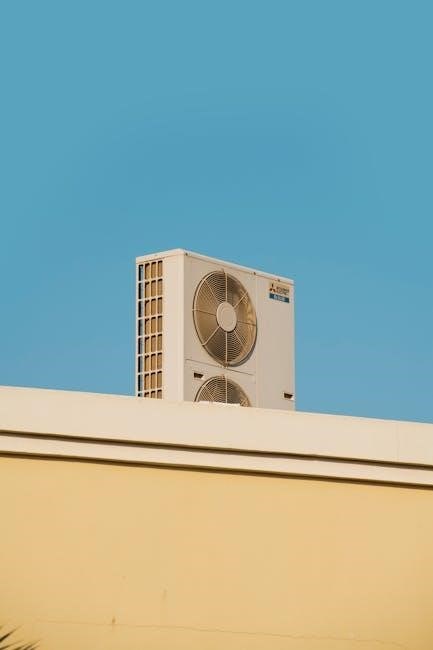
The indoor unit should be mounted on a structurally sound wall, away from heat sources like stoves or radiators. Consider noise levels – locate the unit where sound won’t disrupt living spaces. The outdoor unit requires a level, stable surface, free from debris and vegetation;
Maintain sufficient clearance for servicing and maintenance. Avoid areas prone to flooding or extreme weather conditions. Careful consideration of these factors will maximize your system’s effectiveness and minimize potential issues.
Electrical Requirements & Connections
Correct electrical installation is paramount for safe and efficient operation of your Mitsubishi air conditioning unit. Always consult a qualified electrician to ensure compliance with local electrical codes. Verify the unit’s voltage and amperage requirements match your electrical supply; incorrect wiring can cause damage or fire hazards.
A dedicated circuit is generally recommended to prevent overloading. Use appropriately sized wiring and circuit breakers. Proper grounding is essential for safety. The installation manual provides detailed wiring diagrams and specifications.
Never attempt electrical work if you are not qualified. Ensure the power supply is disconnected before making any connections. Following these guidelines will guarantee a secure and reliable electrical setup for your air conditioning system.
Refrigerant Considerations & Handling
Mitsubishi air conditioning units utilize refrigerant for cooling and heating. Handling refrigerant requires specialized knowledge and adherence to strict safety regulations. Do not attempt to service refrigerant lines yourself; always employ a certified HVAC technician.
Refrigerant leaks can harm the environment and reduce system efficiency. If a leak is suspected, immediately contact a professional for repair. Proper disposal of refrigerant is crucial; it must be recovered and recycled according to environmental guidelines.
The unit’s manual specifies the type of refrigerant used. Incorrect refrigerant type can damage the compressor and void the warranty. Technicians must use appropriate tools and safety equipment when working with refrigerant systems.
Operation & Control
Mitsubishi AC units offer intuitive control via remote and advanced features. Explore basic operation, temperature settings, fan speeds, and timer functions for optimal comfort.
Basic Operation: Powering On/Off & Mode Selection
Powering on your Mitsubishi air conditioning unit is typically achieved using the power button located on the unit itself or, more conveniently, via the remote control. Ensure the unit is properly connected to a power source before attempting to turn it on. Once powered on, you can select your desired operating mode.
Mode selection allows you to customize the unit’s function to suit your needs. Common modes include Cool for lowering the temperature, Heat for warming the space, Dry for dehumidification, and Auto, which automatically adjusts settings based on room conditions. The remote control provides easy access to these modes, often indicated by distinct icons. Switching between modes is straightforward – simply press the corresponding button on the remote. Familiarize yourself with these basic operations to efficiently control your comfort.
Remote Control Functions Explained
The remote control is your primary interface for managing your Mitsubishi air conditioning system. Beyond basic power and mode selection, it offers granular control over your comfort. Key functions include temperature adjustment, typically using up and down arrow buttons, allowing precise setting of your desired climate. Fan speed control lets you choose from low, medium, high, or automatic settings, influencing air circulation.
The remote also features a timer function for scheduled operation, and buttons for specialized modes like ‘Sleep’ or ‘Quiet’. Many remotes include a ‘MakeUp Air’ function, optimizing ventilation. Understanding the icons and button layout is crucial. Refer to your specific model’s manual for detailed explanations of all available functions, ensuring you maximize the benefits of your air conditioning system.
Temperature Settings & Fan Speed Control
Precise temperature control is central to your Mitsubishi AC experience. Utilize the remote’s up and down arrows to set your desired temperature, displayed prominently on both the unit and remote. Remember, smaller adjustments can significantly impact comfort and energy efficiency. Fan speed control offers flexibility; ‘Auto’ mode intelligently adjusts airflow based on temperature difference, while manual settings (Low, Medium, High) provide personalized control.
Experiment with different fan speeds to find the optimal balance between air circulation and noise levels. Higher speeds distribute air more rapidly, while lower speeds offer quieter operation. Understanding how these settings interact allows you to tailor the system to your specific needs and preferences, maximizing both comfort and energy savings.
Using the Timer Function
Mitsubishi air conditioners offer versatile timer functions for enhanced convenience and energy management. The ‘On’ timer allows you to schedule the unit to automatically start at a pre-set time, ensuring a comfortable environment upon your arrival. Conversely, the ‘Off’ timer enables you to program the unit to turn off after a specified duration, preventing unnecessary operation while you sleep or are away.
Access these features through the remote control, navigating to the timer settings menu. You can typically set multiple timers for different days of the week, creating a customized schedule. Utilizing the timer function effectively can lead to significant energy savings and increased comfort, optimizing your air conditioning experience.
Maintenance & Troubleshooting
Regular maintenance, like air filter cleaning, ensures optimal performance. Troubleshooting guides address common issues, including error codes and no cooling/heating problems.
Air Filter Cleaning & Replacement
Maintaining clean air filters is crucial for efficient operation and air quality. Filters trap dust, pollen, and other particles, preventing them from circulating and impacting performance. Regular cleaning or replacement, typically monthly, is recommended, especially with frequent use.
To clean a filter, gently vacuum it or wash it with mild detergent and water, ensuring it’s completely dry before reinstalling. Replacement filters are readily available and should match your unit’s specifications. A clogged filter restricts airflow, causing the unit to work harder, increasing energy consumption, and potentially leading to malfunctions. Consult your user manual for specific filter types and replacement intervals tailored to your Mitsubishi model. Ignoring filter maintenance can void your warranty.
Coil Cleaning Procedures
Maintaining clean condenser and evaporator coils is vital for optimal cooling and heating performance. Over time, coils accumulate dust and debris, reducing their efficiency. Professional cleaning is recommended annually, but homeowners can perform preliminary cleaning.
Before cleaning, disconnect power to the unit. Use a soft brush or vacuum with a brush attachment to remove loose dirt. Coil cleaner specifically designed for air conditioning units can be applied, following the product’s instructions carefully. Avoid bending the delicate fins. Rinse gently with water, ensuring no water enters electrical components. Regular coil cleaning improves airflow, lowers energy bills, and extends the lifespan of your Mitsubishi system. Ignoring this maintenance can lead to reduced cooling capacity and costly repairs.
Troubleshooting Common Issues: Error Codes
Mitsubishi air conditioning units utilize error codes to diagnose malfunctions. These codes, displayed on the indoor unit or remote control, pinpoint the source of the problem, aiding in efficient troubleshooting. Common codes include those related to sensor failures, refrigerant leaks, or communication errors between components.
Consult your unit’s manual for a complete list of error codes and their corresponding solutions. Some codes may indicate simple fixes, like a clogged air filter, while others require professional attention. Ignoring error codes can lead to further damage and reduced system performance. Attempting repairs without proper knowledge is discouraged; contacting Mitsubishi support or a qualified technician is recommended for complex issues. Regularly checking for and addressing error codes ensures optimal operation.
Addressing No Cooling/Heating Problems
Experiencing a lack of cooling or heating from your Mitsubishi unit requires systematic troubleshooting. First, verify the unit is powered on and set to the correct mode. Check the air filter for obstructions – a dirty filter restricts airflow, hindering performance. Ensure outdoor unit fans are unobstructed and functioning correctly.
Inspect the thermostat settings and confirm they are appropriately configured. If the problem persists, examine for ice buildup on the coils, indicating a refrigerant issue or airflow restriction. Low refrigerant levels necessitate professional servicing. Avoid attempting to recharge refrigerant yourself. Contacting a qualified technician is crucial for diagnosing and resolving complex issues like compressor failures or ductwork problems, ensuring safe and effective repairs.
Advanced Features & Technologies
Mitsubishi units boast Inverter technology, ‘MakeUp Air’ features, and Modbus RTU interfaces for enhanced control and integration with building management systems.
Understanding Inverter Technology
Mitsubishi’s Inverter technology represents a significant advancement in air conditioning efficiency and comfort. Unlike traditional systems that cycle on and off, Inverter-driven units modulate their cooling or heating output. This means the compressor speed adjusts continuously to match the exact demands of the room, eliminating temperature fluctuations and maintaining a consistent climate.
This variable speed operation results in substantial energy savings, as the unit doesn’t waste power by repeatedly starting and stopping. Inverter technology also contributes to quieter operation, as the compressor runs at lower speeds for extended periods. Furthermore, it allows for faster cooling or heating, reaching the desired temperature more quickly and efficiently. The precise temperature control offered by Inverter systems enhances overall comfort and reduces energy consumption, making them a smart choice for modern homes and businesses.
Exploring the ‘MakeUp Air’ Feature
The ‘MakeUp Air’ feature, often associated with Mitsubishi’s electric heaters (like the A0011031 model), addresses indoor air quality concerns when using air conditioning in tightly sealed buildings. Traditional AC systems can reduce indoor air pressure, potentially drawing in unconditioned or contaminated air from outside through leaks.
MakeUp Air introduces a controlled amount of fresh air into the space, counteracting this pressure imbalance. This ensures proper ventilation, prevents drafts, and maintains a healthier indoor environment. The feature is particularly beneficial in energy-efficient homes where airtight construction is common. By supplying fresh air, it minimizes the reliance on uncontrolled infiltration, improving comfort and air quality. Proper implementation and adjustment of the MakeUp Air setting are crucial for optimal performance and to avoid over-ventilation.
Modbus RTU (EIA-485) Interface Explained
The Modbus RTU (EIA-485) interface allows for seamless integration of Mitsubishi Electric air conditioning units – including Domestic, Mr. Slim, and City Multi lines – into Building Management Systems (BMS). This communication protocol enables centralized monitoring and control of various AC parameters, such as temperature, fan speed, and operational status.
Utilizing the EIA-485 standard, Modbus RTU provides robust and reliable data exchange. Intesis offers compatible interfaces (e.g., INMBSMIT001I000, formerly ME-AC-MBS-1) to facilitate this connection. This allows facility managers to optimize energy consumption, automate climate control, and remotely diagnose potential issues. The interface requires specific configuration and understanding of Modbus registers to effectively communicate with the AC units, enhancing overall system efficiency and control.
M-Air PRO Operation Manual Overview

The M-Air PRO Operation Manual provides detailed instructions for utilizing Mitsubishi Heavy Industries’ advanced central control system. Available in multiple languages – including English, Spanish, French, Dutch, German, Portuguese, and Italian – it guides users through setup, configuration, and operation of complex AC networks.
This manual covers features like user management, scheduling, and detailed monitoring of connected air conditioning units. It explains how to leverage the system’s capabilities for optimal energy efficiency and comfort. The M-Air PRO system allows for centralized control of numerous indoor units, offering comprehensive oversight and customization options. The PDF version is substantial in size (approximately 38-39MB), reflecting the depth of information provided for professional installers and operators.

Specific Model Series Guides
Detailed guides exist for specific Mitsubishi models like the MSZ-HR25VF, HR35VF, HR42VF, and HR50VF, alongside compatibility information for City Multi and Mr. Slim.
MSZ-HR25VF, MSZ-HR35VF, MSZ-HR42VF, MSZ-HR50VF User Manual
The user manual for the MSZ-HR series (MSZ-HR25VF, MSZ-HR35VF, MSZ-HR42VF, and MSZ-HR50VF) emphasizes crucial safety precautions, clearly defining the meanings of displayed symbols on the indoor unit.
Before operation, thoroughly review these guidelines to ensure safe and efficient use of your air conditioning system. The manual provides detailed instructions on proper installation, operation, and maintenance procedures specific to these models. It covers everything from initial setup and remote control functionality to troubleshooting common issues and understanding error codes.
Pay close attention to sections regarding refrigerant handling and electrical connections. Proper understanding of these aspects is vital for preventing damage to the unit and ensuring personal safety. Refer to the manual for specific technical details and diagrams related to your particular MSZ-HR model.
City Multi & Mr. Slim Compatibility
Mitsubishi Electric air conditioning systems, including the City Multi and Mr. Slim lines, demonstrate broad compatibility with advanced control interfaces like Modbus RTU (EIA-485). This interface, accessible via order codes INMBSMIT001I000 and ME-AC-MBS-1, allows for seamless integration with Building Management Systems (BMS).
This compatibility extends across domestic, Mr. Slim, and large-scale City Multi installations, offering centralized monitoring and control capabilities. The Modbus RTU interface enables users to remotely manage various parameters, optimizing energy efficiency and system performance.
Intesis provides solutions for this integration, with a current user manual version of r2.8 (EN). Ensure compatibility by referencing the specific model documentation and utilizing the appropriate interface modules for your Mitsubishi system.
Technical Specifications & Support
Access online manuals, warranty details, and registration forms easily. Mitsubishi provides comprehensive support resources, including direct contact options for assistance with your unit.
Accessing Online Manuals & Resources
Mitsubishi Heavy Industries Thermal Systems provides a wealth of online resources to support your air conditioning unit. You can directly download installation manuals in various languages – English, French, German, Italian, Spanish, Dutch, Portuguese, Turkish, and Polish – typically in PDF format.
Furthermore, the M-Air PRO Operation Manual is available for download in English, Spanish, French, Dutch, German, Portuguese, Italian, and Polish. These manuals offer detailed instructions for installation, operation, and troubleshooting.
Mitsubishi Electric also offers resources, including the Modbus RTU (EIA-485) Interface documentation for compatible models like Domestic, Mr. Slim, and City Multi. Users can find specific model guides, such as those for the MSZ-HR25VF, MSZ-HR35VF, MSZ-HR42VF, and MSZ-HR50VF series, offering crucial safety precautions and operational details. These resources ensure users have the information needed for optimal performance and longevity of their systems.
Warranty Information & Registration
Mitsubishi Heavy Industries offers comprehensive warranties on its air conditioning units, designed to provide peace of mind and protect your investment. Specific warranty terms and conditions vary depending on the model and region, so reviewing the documentation accompanying your unit is crucial.
Typically, warranties cover defects in materials and workmanship for a defined period. Registration of your unit is often required to activate the full warranty benefits. This process usually involves submitting your purchase information through the Mitsubishi website or a designated registration portal.
Keeping your proof of purchase and warranty registration confirmation is essential for any future claims. Detailed warranty information can also be found within the user manuals and on the official Mitsubishi support website. Proper registration ensures swift and efficient service should any issues arise during the warranty period.
Contacting Mitsubishi Support
Mitsubishi Heavy Industries Thermal Systems provides multiple avenues for customer support, ensuring assistance is readily available when needed. For general inquiries, technical support, or warranty claims, their official website is an excellent starting point, offering a wealth of resources and FAQs.
You can typically find contact information, including phone numbers and email addresses, specific to your region on the website. Mitsubishi also often provides a live chat feature for immediate assistance with less complex issues.
When contacting support, having your model number and purchase date readily available will expedite the process. Furthermore, exploring online forums and communities dedicated to Mitsubishi air conditioning can offer peer-to-peer support and solutions to common problems. Dedicated support ensures a positive user experience.